FROM THE DUCAT TO THE GOLD ZECCHINO OF VENICE: FIVE CENTURIES OF HISTORY SCULPTED IN GOLD
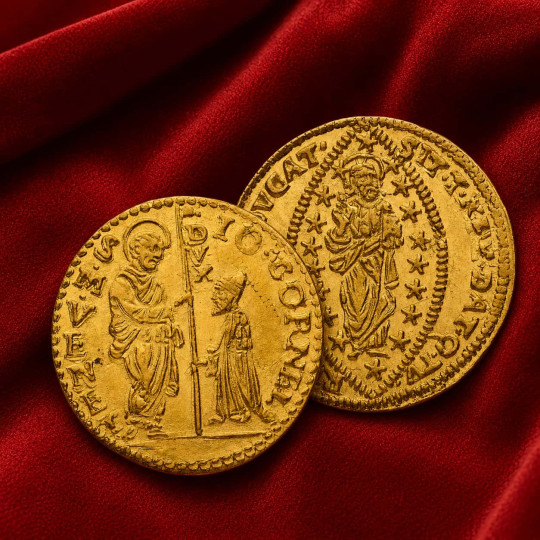
On October 31, 1284, the Republic of Venice introduced a new gold coin, the Venetian ducat. It was a true political and commercial statement.
Florence and Genoa had already begun minting gold coins in 1252, coins capable of establishing themselves in international trade. Venice, a mercantile power built on maritime routes, spices, metals, textiles and relations with the East, could not afford to fall behind. It needed a stable, recognizable and reliable coin, one that could circulate in ports, fairs, exchanges and major transactions with the same authority as the Republic that issued it.
Thus the gold ducat of Venice was born, destined, from the mid-sixteenth century onward, to become the zecchino. For more than five centuries, this coin accompanied the history of the Serenissima with almost no change to its appearance. On one side, the doge kneeling before Saint Mark; on the other, Christ blessing within a mandorla. It was an extraordinary iconographic continuity, one that transformed the zecchino into a symbol of stability, trust and power.
The gold ducat of Venice
The first chapter of this story begins with Giovanni Dandolo, doge from 1280 to 1289. Under his rule, in 1284, Venice introduced the gold ducat. In the minutes of the Great Council meeting, the coin was described as being as good and as fine as the florin. The message was clear: Venice wanted a coin worthy of its role in international trade. The ducat was not created for local or marginal use, but to travel. It had to be accepted by merchants, bankers and money changers; it had to be recognizable at first glance; it had to guarantee quality and continuity.
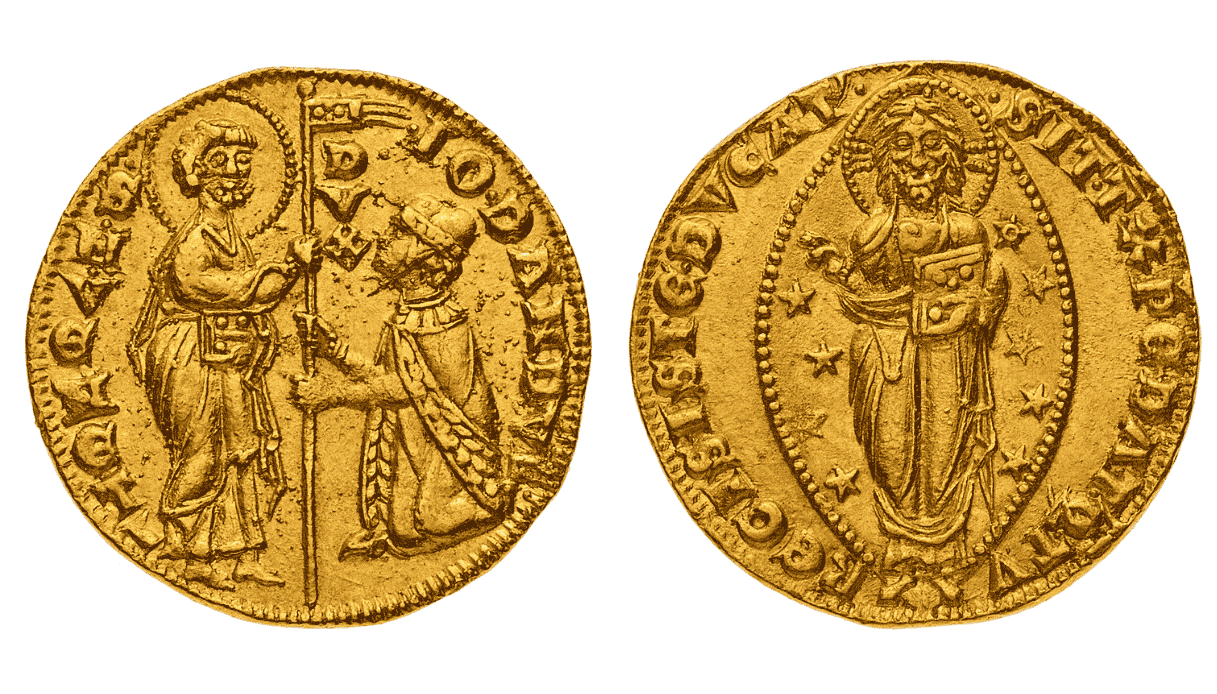
The iconography was chosen with great political intelligence. On the obverse appears the kneeling doge, receiving the banner of the Republic from Saint Mark. On the reverse, Jesus Christ blessing within an almond-shaped frame. It is a simple composition, yet an extraordinarily powerful one. Venice presents itslf as a Christian Republic: autonomous, protected by its patron saint, and legitimized by a spiritual and institutional tradition.
The strength of the ducat lay in its stability. For centuries, while doges, political balances, trade routes and relations with other Mediterranean powers changed, the Venetian coin retained an almost unchanged appearance. To a casual observer, ducats may all seem alike. In reality, each specimen records small variations: the name of the doge, the shape of the banner, the treatment of the figures, the quality of the engraving, and the taste of the period.
The gold zecchino of Venice
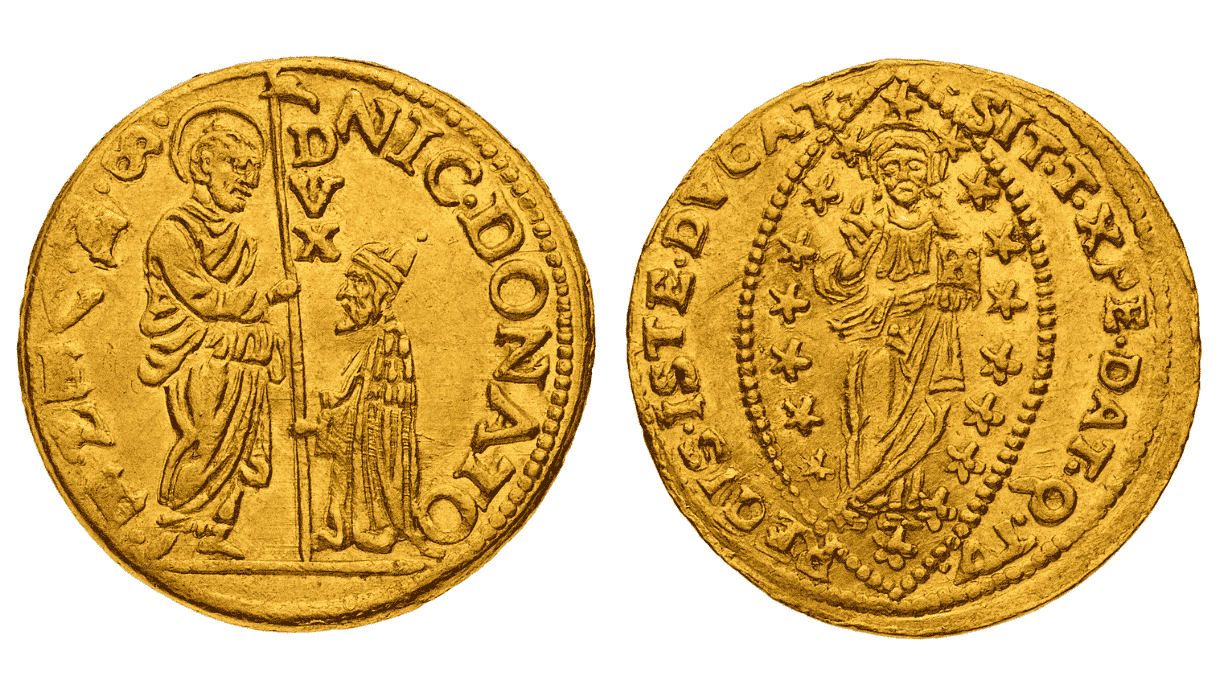
The name zecchino became established in the mid-sixteenth century. In 1545, under the dogate of Francesco Donà, the gold ducat took on the new denomination of zecchino, without losing its main characteristics. The change of name was also linked to the introduction of the silver ducat, which made it necessary to distinguish the gold coin more clearly.
Its value did not depend on gold alone, but also on trust. A Venetian zecchino was recognized because the Republic had built, over time, a reputation for monetary solidity. In an economy made up of long journeys, maritime risks, wars, exchanges and distant markets, the stability of a coin was a form of political capital.
Its appearance also contributed to this authority. The doge is not depicted as an absolute sovereign, but as the representative of the Republic before Saint Mark. The scene reaffirms the Venetian idea of power as institutional continuity rather than personal monarchy.
A series of Venetian zecchini is almost a golden chronology of the Serenissima. Francesco Donà marks the transition to the zecchino. Marino Faliero recalls one of the most dramatic pages in Venetian history, with the conspiracy, the death sentence and the damnatio memoriae. Nicolò Donà and Francesco Corner tell the story of the extreme rarity of very brief dogates. Giovanni I Corner, instead, takes us to the heart of seventeenth-century Venice, amid political tensions, commercial crises and a shortage of precious metals.
Aste Bolaffi: ducats and zecchini of the Republic of Venice at auction in Turin
The history of the gold zecchino returns to the spotlight in the Aste Bolaffi Numismatics auction, scheduled to take place at Sala Bolaffi on Thursday, May 28, 2026 and Friday, May 29, 2026, in Via Cavour, Turin. The sale includes an important group of ducats and zecchini from the Republic of Venice, with specimens covering more than five centuries of Venetian monetary history. The session featuring the Venetian lots will be held on Thursday, May 28, 2026, from 2:30 p.m. The exhibition will be open to visitors at Sala Bolaffi from Wednesday, May 20 to Friday, May 29, 2026, excluding Saturday and Sunday, from 9:30 a.m. to 1:00 p.m. and from 2:00 p.m. to 6:30 p.m.
Among the most significant lots is the ducat of Giovanni Dandolo, very rare and estimated at €10,000: the coin that makes it possible to tell the very origin of the Venetian ducat, first minted in 1284. Another highly important specimen is the ducat of Marino Zorzi, doge for just over ten months, very rare and with an opening bid of €20,000. The brevity of his dogate makes his issues particularly sought after.
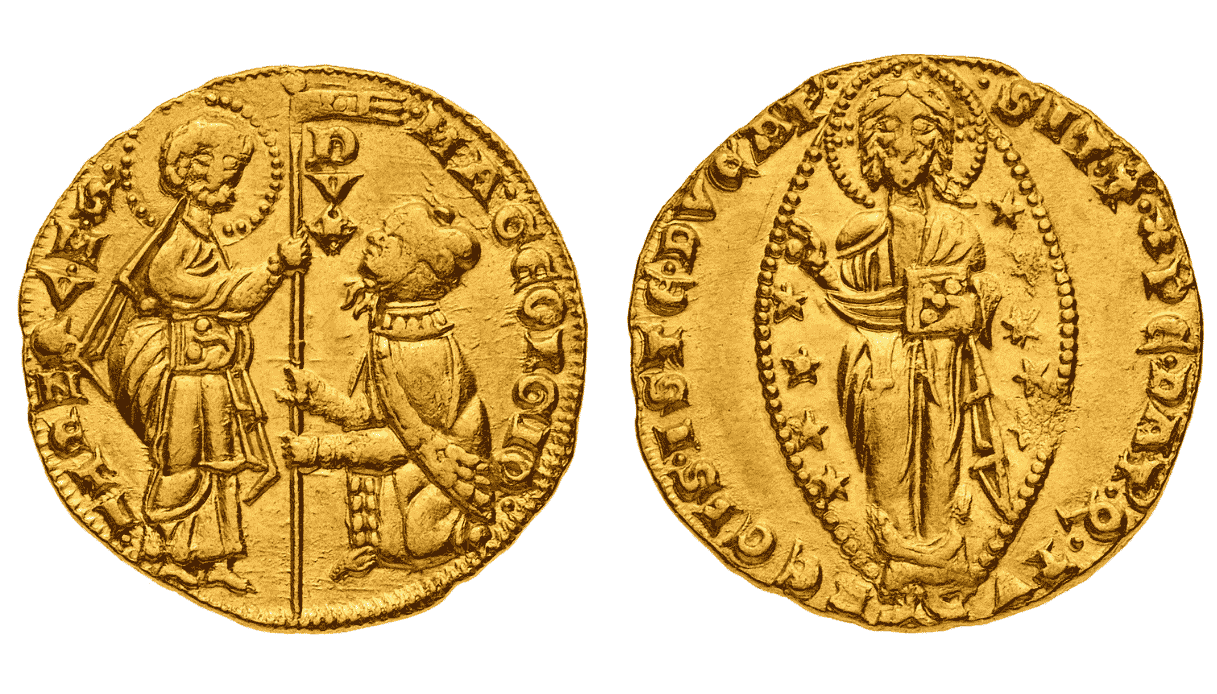
Even more powerful, from a historical point of view, is the ducat of Marino Faliero, the doge sentenced to death in 1355 after a conspiracy against the Venetian aristocracy. The catalogue emphasizes that, because of the damnatio memoriae and the melting down of many coins, very few specimens have survived. The opening bid is €20,000.
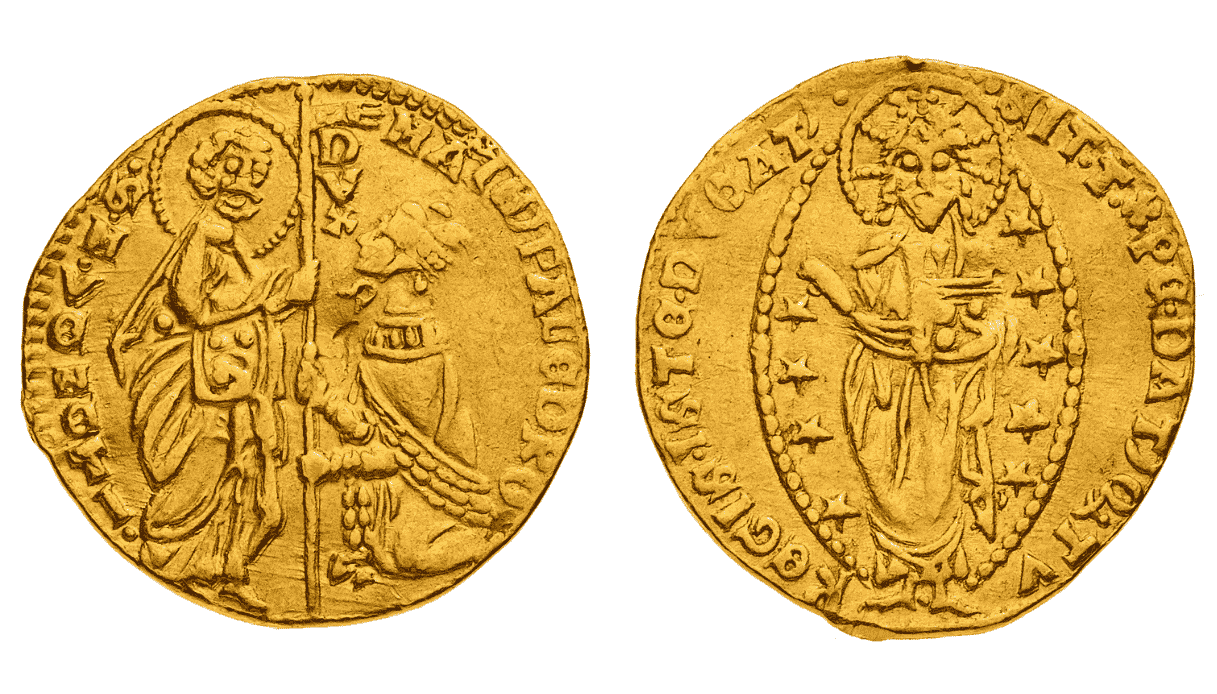
Among the great fifteenth-century rarities, the ducat of Marco Barbarigo deserves special attention: extremely rare, with an opening bid of €15,000. His dogate lasted less than a year and is connected to an important ceremonial moment. He was, in fact, the first doge to receive the dogal insignia on the Giants’ Staircase of the Doge’s Palace.
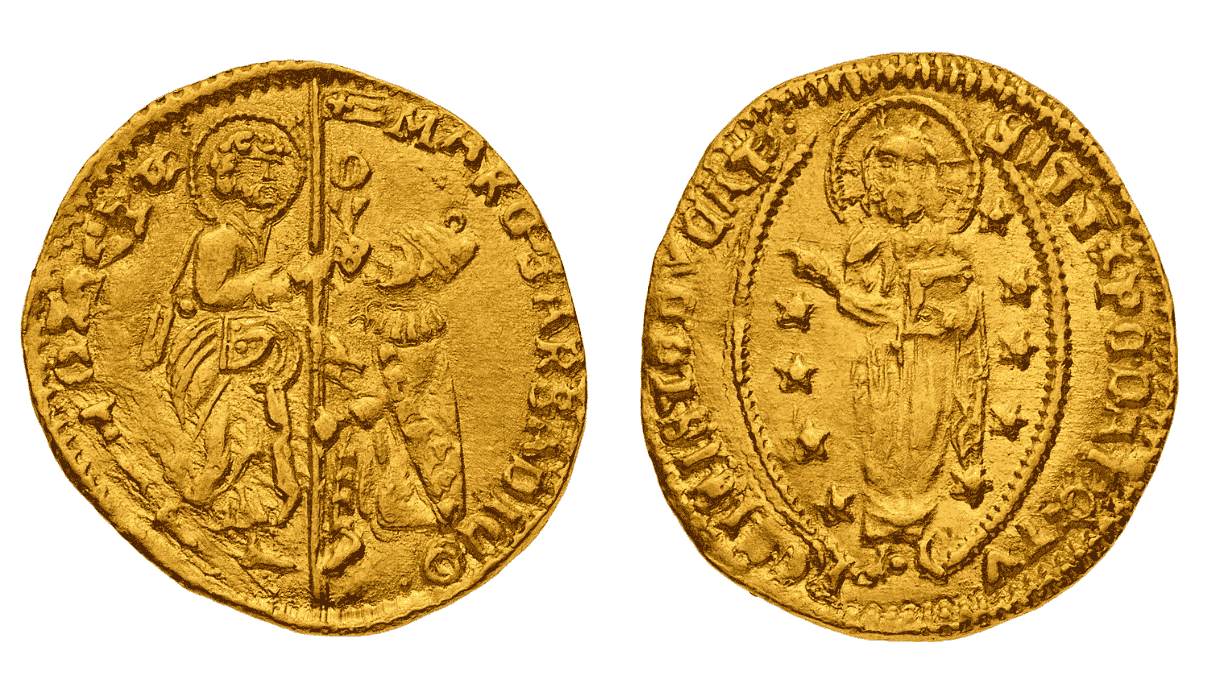
The top lot of the selection, however, is the zecchino of Giovanni I Corner, extremely rare and with an opening bid of €50,000. This coin is connected to a complex phase of seventeenth-century Venice, marked by political tensions, nepotism, the War of the Mantuan Succession, commercial crisis and the scarcity of precious metals. It is precisely the practice of melting coins down that makes this specimen, in this state of preservation, one of the greatest rarities in Venetian coinage.
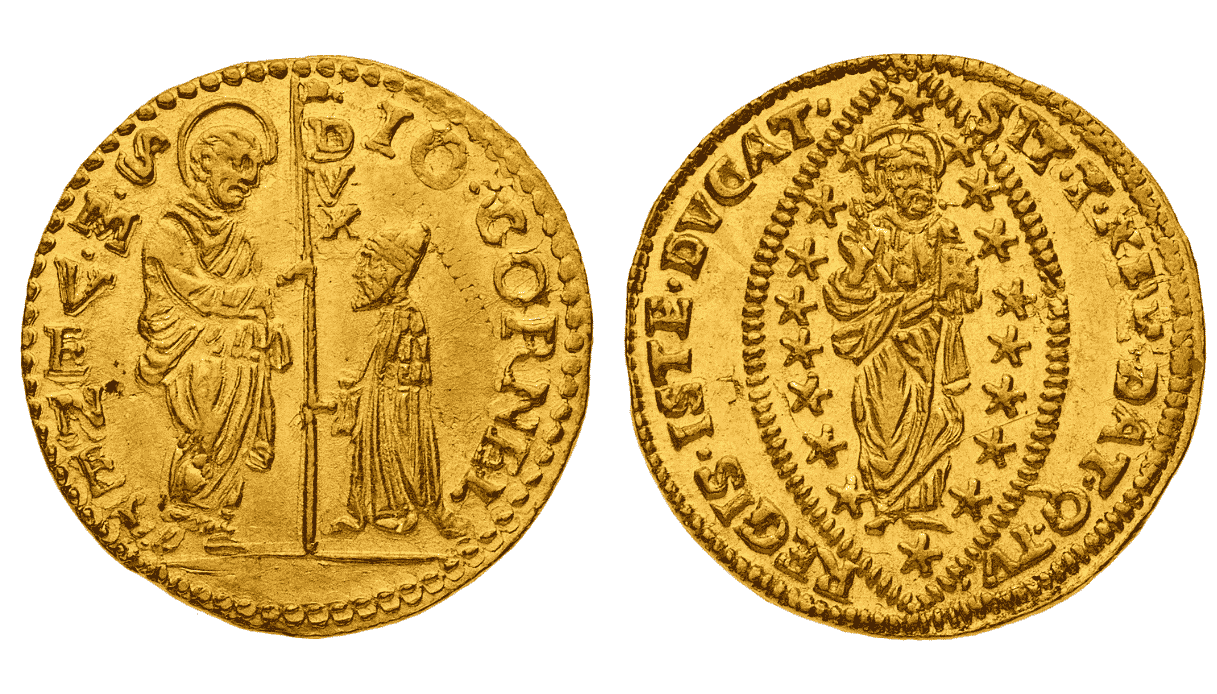
The journey closes with the zecchini of the last doges, up to Ludovico Manin. The Republic was approaching its end, but it entrusted to its gold coins the memory of the ancient face of Venice.
Browse the catalogue