WITH GUFRAM AND SUPERSTUDIO, ITALIAN DESIGN GOES INTERNATIONAL
Between the mid-1960s and the early 1970s, Italian design changed its language. After the years of post-war reconstruction and the economic boom, widespread prosperity coexisted with the tensions of protest and social unrest. Young designers no longer limited themselves to creating beautiful and functional objects: they transformed furniture, materials and domestic environments into critical, ironic and provocative tools.
Turin occupies a special place in this story. It was not only the city of industry and Fiat, but also an underground laboratory of artistic and architectural experimentation. In the spaces of the Piper, inspired by the famous Roman club but soon oriented towards a more experimental approach, the night became a meeting ground for music, performance, art and politics. It was within this climate that experiences such as Gufram and Gruppo Strum took shape, becoming protagonists of a season in which design did not produce only objects, but experiences, provocations and perceptual games. Here, even an ordinary urban material such as the porphyry of Turin’s streets could be transformed into a soft, paradoxical and domestic seat.
In 1972, the exhibition "Italy: The New Domestic Landscape" at the MoMA in New York consecrated this turning point, bringing Italian design onto a definitively international stage. Alongside well-known figures such as Gae Aulenti, Mario Bellini, Guido Drocco and Franco Mello, new realities and different experiences also found their place, from Gufram’s radical Turin to the conceptual visions of Superstudio. Together, they showed the world a new way of understanding the home: no longer merely a space for living, but a mental, political and cultural landscape.
Gufram and Its Anticonformist Seating
In Turin, Gufram became one of the most original laboratories of radical design, with expanded polyurethane furniture of a sculptural, ironic and provocative character. Around the brand gathered some of the most vibrant experiences of Italian anti-design: Giorgio Ceretti, Pietro Derossi and Riccardo Rosso, central figures of Gruppo Strum, Guido Drocco and Franco Mello, creators of the famous "Cactus", Piero Gilardi and Studio65, known for its pop, visionary and unconventional research. With Gufram, design became a critical and political tool: no longer simply furniture, but a surprise-object, a domestic sculpture, a provocation to be inhabited.
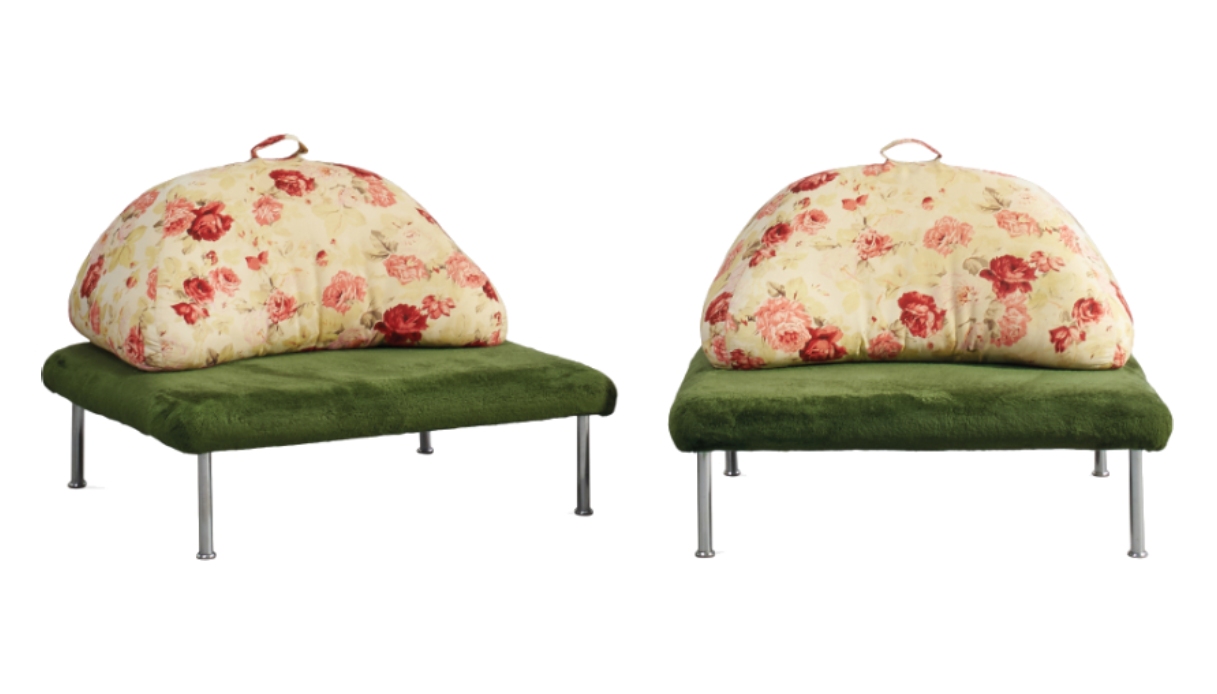
Among the lots in the design auction catalogue of 19 May 2026, organised by Aste Bolaffi, two Gufram pieces from that period stand out. The "Wimbledon" armchairs of 1974, designed by Ceretti, Derossi and Rosso, are modular seats with a strong visual impact. Their chrome-plated metal tube structure supports large padded bases upholstered in green fabric, which can be arranged in different configurations and are fitted with removable back cushions. Both the name and the design ironically evoke a square metre of grass from the Wimbledon tennis court, transforming it into an arena of domestic and provocative relaxation.
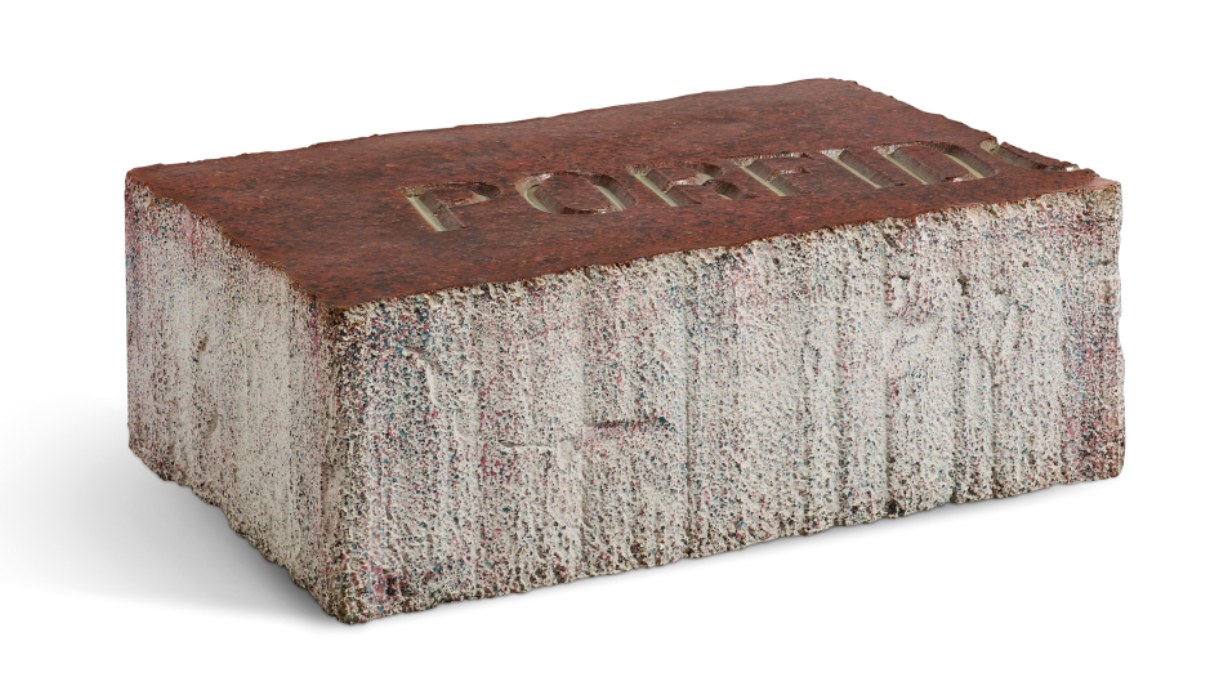
"Massolo", on the other hand, is a seat created by Piero Gilardi for Gufram in 1974. At first glance, it appears to be a heavy block of porphyry; in reality, it is made of worked and painted expanded polyurethane. The illusion of the material is emphasised by the word “PORFIDO” engraved on the surface. This paradoxical contradiction embodies Gufram’s ethics of true and false. The perceived hardness of porphyry is ironically betrayed by the surprising comfort of the foam and by the lightness of the block.
Superstudio and the “Quaderna” Series
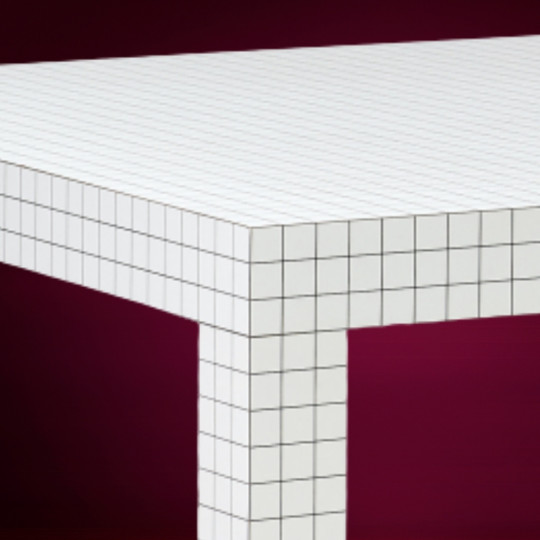
The Florentine collective Superstudio made ideology its defining feature. In 1972, it brought an architectural installation to the MoMA, reaffirming how its architectural histograms and the concept of the Continuous Monument derived from an orthogonal spatial grid. From this vision came the Quaderna series, developed by Superstudio between 1969 and 1972 and put into production by Zanotta in 1972. These are architectural furnishings based on a single graphic motif: all surfaces — tops, legs and sides — are covered in white laminate printed with black squares at a regular spacing of 3 cm. The geometric pattern, conceived internally as the matrix, recalls the urban order of a city grid. The result is an expandable artificial landscape, a single squared surface extending infinitely, which can be declined into tables, chairs, benches, cabinets and other furnishing elements.
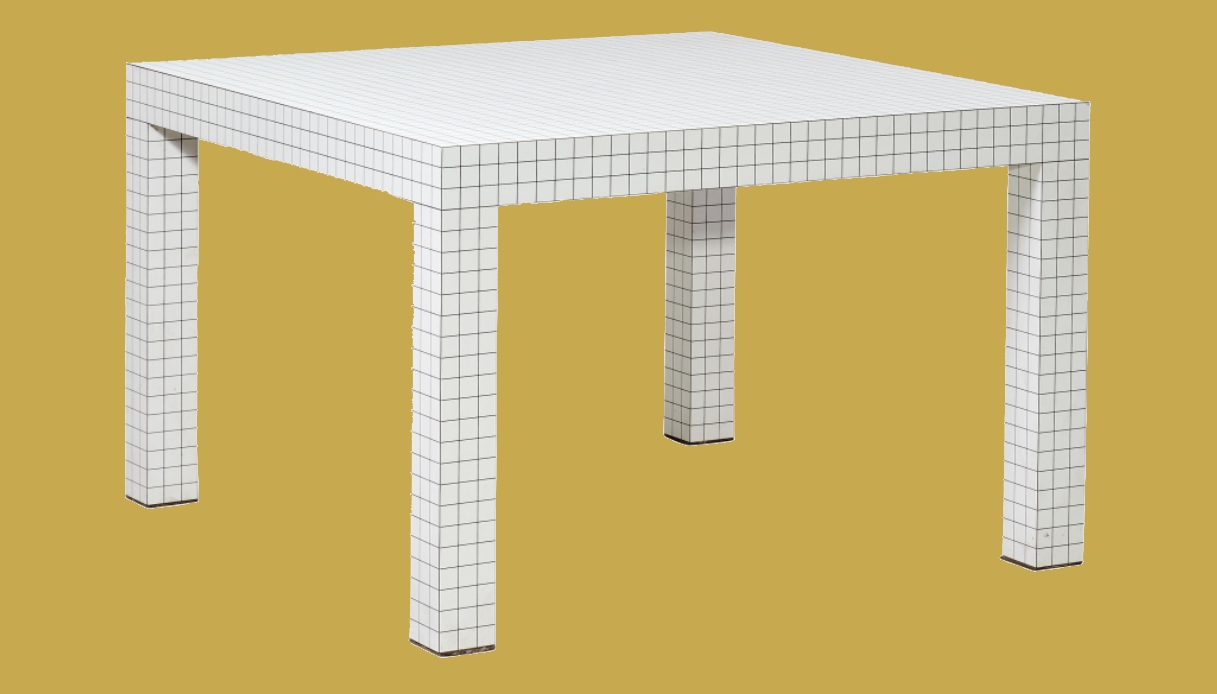
Among the lots offered by Aste Bolaffi are two Quaderna tables from 1971, with a honeycomb wood structure covered in white plastic laminate printed with black squares. These pieces embody Superstudio’s radical language, made of conceptual rigour and austere formal coherence, and symbolise the leap of Italian design into a global horizon. The Passiflora lamp, designed by Superstudio for Poltronova and also featured in the auction catalogue, belongs to the same season.
Aste Bolaffi, 19 May 2026: The best design lots at auction
The design auction of 19 May also becomes an opportunity to travel through a period in which Italian furniture ceased to be mere function and became language, provocation and domestic landscape. From Superstudio’s grids to Gufram’s anticonformist seating, the catalogue tells the story of the moment when Italian design learned to speak to the world.
The auction will take place live on Tuesday, 19 May in Turin, at Spazio Bolaffi, corso Verona 34/D, in two sessions: the morning session starting at 11:30 a.m. and the afternoon session from 2:30 p.m. It will also be streamed, with the possibility to participate via Internet Live. The lots will be on view from Thursday, 14 May to Tuesday, 19 May, excluding Sunday, from 10:00 a.m. to 6:00 p.m.a partire dalle ore 10.00 fino alle 18.00.
Browse the catalogue/a>